If you enjoy this guest post, please subscribe to Writing Cabin - Mark Carter for more content about the Carter farm, Mark’s musings, and entertaining stories of fiction! The Carters’ Farm Newsletter is beginning to share—along with current farm updates and reflections—short, episodic articles about the Carter farm to give a glance at the roots of the the farm in the Minnesota Heartland.
Over the River and up the Hills
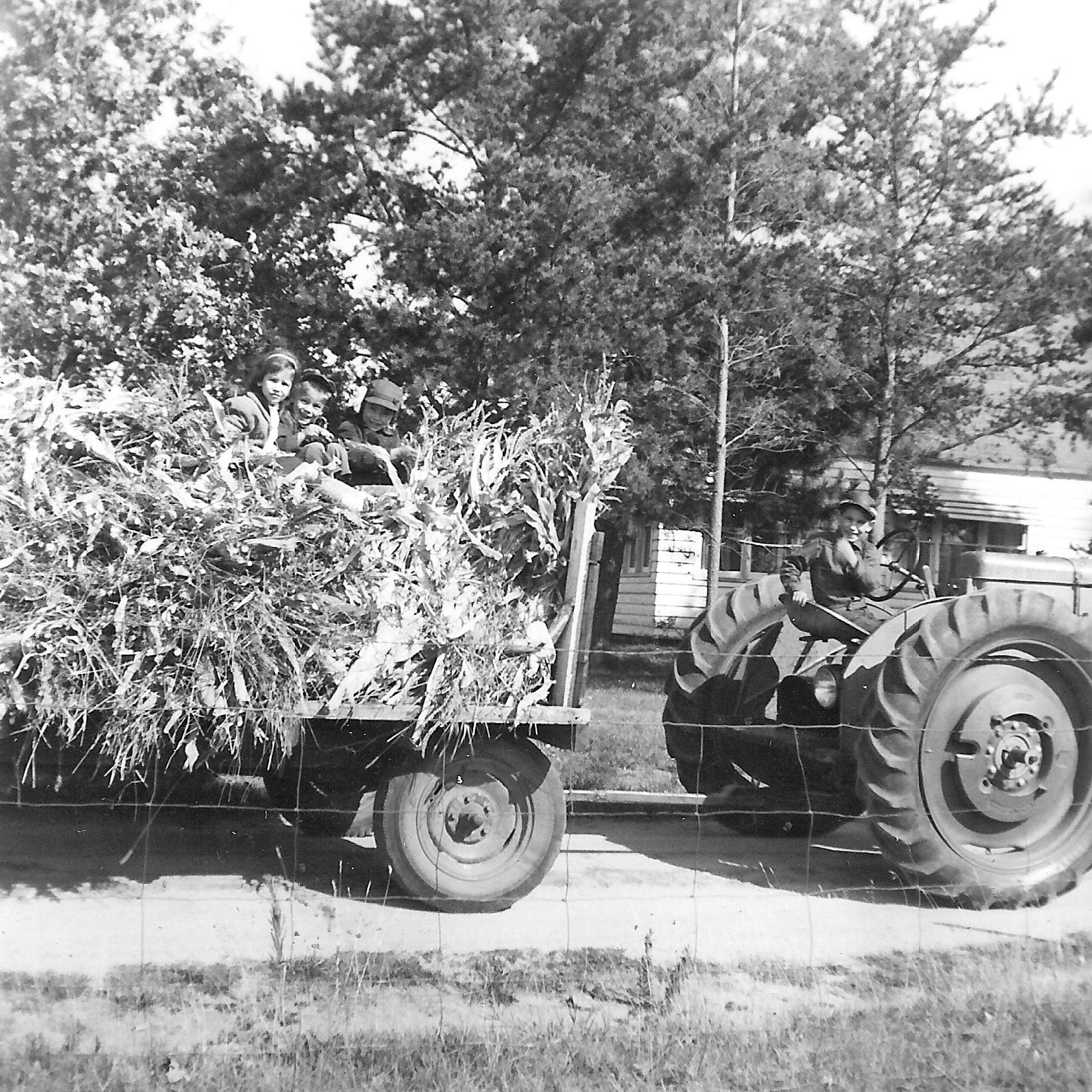
The old Minneapolis-Moline tractor stayed centered on the bridge that crossed the river at the bottom of a steep hill. Behind the tractor, the loaded wagon weaved back and forth. We kids, tucked in the corn fodder sheaves, feared the dark river on both sides. We also knew some slippery hills were ahead.
Fetching the Sheaves
The cornfield we leased was on the Shell Prairie about a mile north of the farm. During the amber of autumn, the binder cut and bundled the corn into sheaves, which were then stacked to dry in romantic shocks that adorned the field like a painting.
Fall fodder retrieval was snow-free and easy. But, come winter, in the cutting prairie wind, the shocks stood hard and cold, stroked with snow.
Bundled in castoff wool and cotton, we wrestled the sheaves from the frozen ground and threw them high and deep on the wagon.
Often, when a shock was torn apart, exposed field mice dashed for new winter quarters.
Once the wagon was full, it crossed the snowy, stubbled field and headed for the slippery road.
Farmer Physics
It was a relief when I could peek back through the cornstalk bundles and see that we had made it across the river, but we had two more hills to climb to reach the farm and wood-heated home.
Daddy was at the wheel of the old Moline Model R, which used to be yellow with red trim but now had a decidedly overall rust patina. He placed my two oldest brothers on the tractor’s rear axle, one boy gripping each fender.
The physics was to combine the snort of the tractor with my skinny brothers’ combined weight of about one hundred pounds to create enough power and traction to help the big-lugged tires grip the snow-packed uphill road. Daddy added more physics as he balanced the gears with the throttle. If the rear tires started spinning, Daddy would steer the right rear tire onto the road shoulder to find fresh traction.
Halfway up those hills, I would imagine the entire outfit losing forward motion and rolling backwards down the hill out of control and into the ditch where we would land mangled and bloody.
But we always made it to the top.
Modern and Efficient
The cornstalk binding and shocking ended the year we started renting an old redwood silo from the dying farm across the river. Instead of throwing the dry cornstalks to the cows, we pitched and shoveled seasoned silage into a truck or trailer, drove it to the farm, then pitched and shoveled it in front of the cows.
Another big change: We built our own silage bunker right on the farm near the barn. We used a Bobcat skid-steer loader to move the fermented forage to the dairy animals.
Finally, we built a silo right next to the barn. Sheltered from wind and snow, we just flipped an electric switch or two, cranked a cable winch several turns, and a conveyor gently distributed the rich, sharp-smelling corn silage to the dairy cattle’s long manger.
No sweat, and all safe and efficient. But probably nothing worth putting on canvas.
If you enjoyed this guest post, please subscribe to Writing Cabin - Mark Carter for more content about the Carter farm, Mark’s musings, and enjoyable fiction!